
Coma Beach Mark Thirty Years of The Scapegoat’s Agony with a Career-Spanning Compilation
The Scapegoat’s Agony (Edits, Odds & Ends) closes out Coma Beach’s multi-year anniversary campaign for their 1995 debut. The record combines special edits of the original album with rare demo material never fully realized in the studio. Singles like Jesus’ Tears and Extreme Masochist appear alongside earlier, rawer versions of the same songs. The compilation traces a direct line from the band’s earliest recordings to its most fully formed statement. It is both retrospective and reintroduction at once.
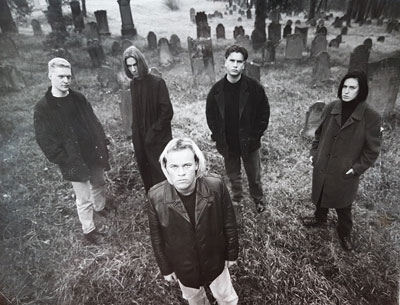
German alternative punk-rock outfit Coma Beach have spent the better part of thirty years circling the same wound, and on their new compilation The Scapegoat’s Agony (Edits, Odds & Ends), they finally lay the whole autopsy out on the table. Released in early June 2026, the record pulls together special shorter edits of all thirteen tracks from the band’s 1995 debut The Scapegoat’s Agony, three tracks from their February 1995 demo tape, and three more from their earliest December 1993 demo, expanding a once-tight thirteen-track narrative into a sprawling nineteen-track archival set.
The original The Scapegoat’s Agony was never a casual listen. Recorded in September 1995 and released through German punk label Impact Records, the album took its title from Samuel Beckett’s Waiting for Godot, borrowing the Irish playwright’s bleak sense of futility to frame the record’s unnamed antihero on his painful, excruciating emotional odyssey. Coma Beach built their sound at the crossroads of Sex Pistols aggression, Ramones economy, Hüsker Dü melodic bite, and Joy Division dread, with The Cure and The Jesus and Mary Chain softening the edges just enough before Guns N’ Roses, Therapy? and Bad Religion yanked them straight back into snarl. The band’s English lyrics have always drawn from a wider bookshelf than most of their peers, threading Beckett’s existentialist bleakness alongside Douglas Adams’s satirical absurdity, the tragic self-inflicted wreckage of Shakespeare’s characters, and Arthur Schopenhauer’s radical metaphysical pessimism, a combination that gives even their shortest, most brutal songs a strange literary weight.

The band’s approach to their own catalog has always been one of return rather than retreat. In June 2021, at the height of the COVID-19 pandemic, The Scapegoat’s Agony was re-released digitally through DistroKid, introducing the album to a generation of listeners who first encountered punk through a screen rather than a basement show. That re-release set the stage for a longer campaign: between 2023 and 2025, in the run-up to the album’s thirtieth anniversary, Coma Beach issued four singles, Jesus’ Tears, Nothing Right, Another Song, and Extreme Masochist, alongside three EPs, I Won’t Listen, A Madman’s Dream/Mind Descending, and Passion/Bliss, each offering remastered versions of album cuts and select demo material. The Scapegoat’s Agony (Edits, Odds & Ends) arrives as the culmination of that anniversary arc, gathering everything into a single, sprawling document.
Musically, the compilation trades some of the original record’s sprawl for structural tightness, presenting alternate mixes and shorter edits that sharpen the album’s punch without sanding down its edges. What makes the collection genuinely archival, though, is its excavation of the demo years. Tracks like Absurd, Every Day The Same, and Die trace back to December 1993, revealing a band already fluent in existential dread before they’d even set foot in a proper studio. Die, in particular, loops its central refrain like a mantra rather than a question, echoing the absurdist lineage of Camus, Beckett, and Kafka while placing its narrator somewhere between consciousness and oblivion, scarred, paralyzed, caught in a liminal space that feels closer to lament than complaint. Every Day The Same operates with similar minimalism, its flat repetition mimicking the very monotony it describes, questioning whether changing anything, the self or the world around it, would matter at all before quietly concluding that it wouldn’t.
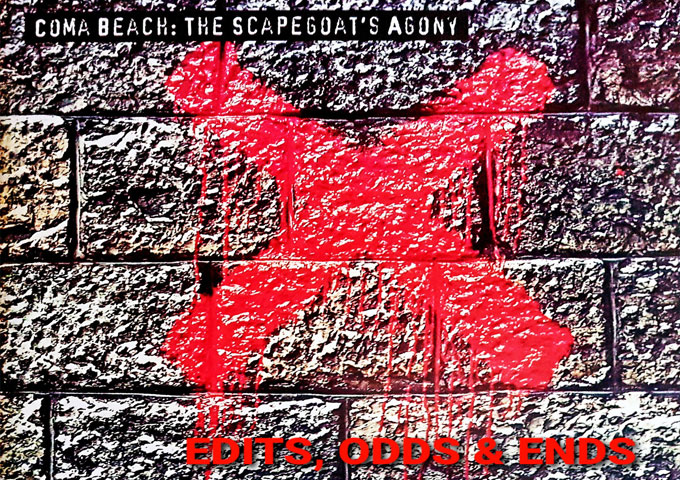
The album’s cover art distills all of this into a single, brutal image: a dripping red X painted across a rough stone wall, rendered beneath band and album lettering in a worn, typewriter-style font that looks as though it’s been struck one too many times. The X reads as both wound and erasure, a mark of condemnation that recalls the scapegoat figure at the record’s core, someone singled out, sacrificed, made to carry the sins of others. The stone wall behind it adds a second layer, its rough, immovable texture suggesting permanence and inevitability, a visual echo of lines elsewhere in the catalog about threats carved in stone and lives trapped in cycles of futility. Even the paint itself carries meaning: fresh, unstable, still running, it captures the record’s constant push and pull between endurance and collapse.
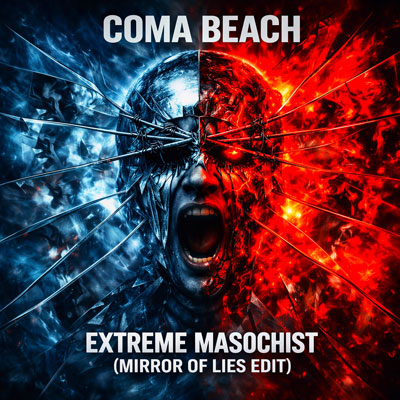
That imagery threads directly through the tracklist. In Jesus’ Tears, crucifixion curdles into a vow of spiritual revenge, its narrator claiming a place beside Christ not as a saint but as a wounded, defiant witness plotting retribution. In Extreme Masochist, pain itself becomes the only authentic experience left, its stark, repetitive refrain functioning less like a chorus and more like a ritual chant. Mind Descending and A Madman’s Dream stage psychological collapse as literal descent, stacking claustrophobic imagery, stuck elevators, clinical white coats, a fleeing guardian angel, into a portrait of a mind that can no longer tell whether it’s the patient or the world around it that’s gone insane.
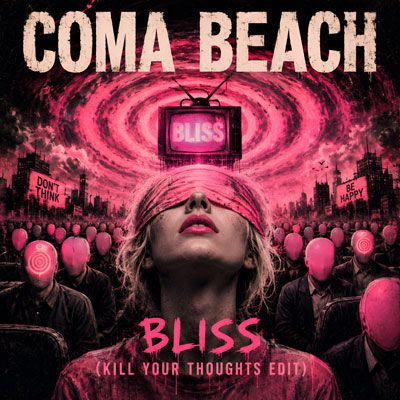
Not every track on The Scapegoat’s Agony (Edits, Odds & Ends) deals in overt horror. Bliss turns its title inside out, exposing manufactured happiness as a mechanism of social control, while Astray (Fallen Angel) plays mock-prophet, adopting the language of miracles and salvation to expose how easily religious rhetoric curdles into exploitation and greed. Absurd, first written back on that 1993 demo, takes direct aim at the consolations people build for themselves, memory, ritual, wealth, books, and finds them all hollow inside what its narrator calls a brave new world gone rotten, its venom borrowed from Shakespeare but pointed in an entirely different direction. Another Song stitches mundane repetition to grotesque imagery and glib commercial slogans, landing somewhere between punk howl and modern fable about substitution, where every real feeling gets replaced by another cheap stand-in. I Won’t Listen, meanwhile, turns apathy into an actual strategy, a deadpan refusal to be moved or converted that plays as both petulant contempt and genuine self-defense against a culture constantly demanding belief.
There’s tenderness buried in the wreckage too, or at least the memory of it. Passion mourns a fire that’s gone cold, keeping its ashes like a relic while still, quietly, demanding someone answer for the loss. Nothing Right paces the ruins of a life with equal parts confession and accusation, sliding between everyday idiom and stark moral crisis until ordinary failure and existential guilt become indistinguishable from one another. The Past Of The Future functions as something closer to parable, wrapping apocalyptic consequence in small domestic details, whispered rooms, fragile glass, until the past itself becomes an almost living force exacting payment for what was never reckoned with. And The Final Door closes the record’s original sequence the way a trial closes a case, addressing the listener directly and forcing them to answer, once and for all, for what they’ve done.

What The Scapegoat’s Agony (Edits, Odds & Ends) ultimately offers isn’t a simple remaster or a victory-lap anniversary release. It’s a band opening its own archive and refusing to flatter what it finds there. The shorter edits sharpen the original album’s teeth, the demo tracks reveal a group that arrived fully formed in their obsessions if not yet their production budget, and the whole nineteen-track sequence plays like a single, unbroken confession stretched across three decades. Coma Beach have never been interested in resolution, and this collection doesn’t offer any. What it offers instead is proof that the wound they opened in 1995 never fully closed, and that they’re still willing, thirty years on, to press directly on the bruise.
OFFICIAL LINKS:
https://distrokid.com/hyperfollow/comabeach/the-scapegoats-agony-edits-odds–ends-2