
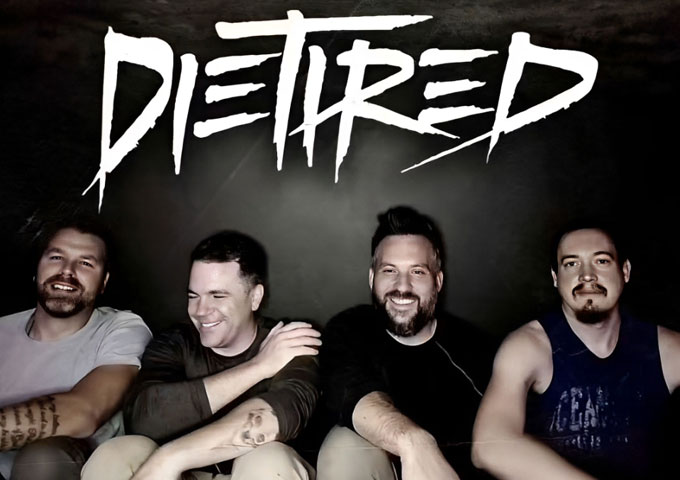
Die Tired’s “Open Hearts Club”: Finding Strength in the Courage to Be Honest
Pennsylvania alternative-rock trio Die Tired confronts the emotional complications of modern relationships. “Open Hearts Club” pairs infectious guitar-driven energy with a message about trust, vulnerability, and emotional transparency. Co-produced and mixed by Grammy-nominated rock veteran Glen Robinson, the single benefits from an accomplished production pedigree. Beneath its energetic exterior, the song examines the damage caused by deception and the importance of genuine connection. It is an invitation to lower emotional defenses, embrace vulnerability, and discover the freedom of meaningful human connection.
For Pennsylvania alternative-rock trio Die Tired, authenticity is more than a convenient lyrical theme. It is an essential part of the band’s identity, informing both its approach to songwriting and its determination to create music that connects with people through recognizable human experiences. Their latest single, “Open Hearts Club,” brings that philosophy into particularly sharp focus, delivering an energetic, guitar-driven alternative-rock statement about trust, vulnerability, and the complicated business of allowing other people to see who we really are.
Combining the immediacy of pop-punk with the weight and attitude of modern rock, Die Tired establishes an appealing balance between melodic accessibility and emotional substance. “Open Hearts Club” has the kind of infectious instrumental character that invites listeners in immediately, but its underlying message gives the track considerably more to explore than its initial energetic appeal might suggest. Rather than treating vulnerability as something to conceal or apologize for, the band presents emotional openness as an essential ingredient in building relationships that can withstand the pressures of everyday life.
The single also represents a significant production collaboration, bringing Die Tired together with Grammy-nominated producer, engineer, and mixer Glen Robinson. With a career extending across several generations of rock, Robinson brings an impressive understanding of how to capture the personality and power of a band without sacrificing the clarity required to make every instrumental and vocal detail count.
His professional history includes work with The Ramones, David Bowie, AC/DC, The Steve Miller Band, The Beach Boys, Voivod, GWAR, and Probot, the project associated with Dave Grohl. Having developed his recording expertise at Montreal’s legendary Le Studio Morin Heights, Robinson also worked alongside influential figures including Keith Richards and George Martin. His engineering work on GWAR’s Phallus in Wonderland earned a Grammy nomination, while his production of Voivod’s Nothingface remains an important reference point in heavy music.
That experience gives “Open Hearts Club” an especially interesting foundation. Co-produced and mixed by Robinson, the recording benefits from a veteran’s understanding of rock dynamics, combining definition and production depth with the directness that makes alternative rock so appealing. The instrumentation retains its energy and personality, while the melodic and vocal elements remain accessible enough to keep the song’s central message firmly in focus. It is a collaboration that supports the band’s natural character rather than overwhelming it with unnecessary studio embellishment.
Nevertheless, the real substance of “Open Hearts Club” resides in its examination of the distance between what people say, what they conceal, and what they genuinely need from one another. The opening immediately introduces a sense of emotional and psychological instability, with the narrator struggling to maintain perspective as circumstances become increasingly difficult to navigate. References to dizziness, rapidly moving events, and the fear of missing another moment suggest a mind attempting to process too much at once. Beneath that restless imagery lies a desire for stability, for something dependable enough to make life and relationships feel comfortable again.
That desire becomes particularly important as the song develops. The lyrics contrast the possibility of emotional security with the destructive consequences of deception. The recurring image of lies invading meaningful experiences, leaving unpleasant memories behind, gives the track its strongest thematic foundation. Dishonesty is presented as something that gradually contaminates shared experiences, undermining confidence and making it difficult to establish the trust necessary for lasting relationships.
This is where “Open Hearts Club” becomes especially relatable. Its observations extend beyond romantic relationships, touching on friendships, family connections, and the everyday interactions through which people establish their understanding of one another. As bassist Jim Lee explains, dependability is a quality he deeply values in relationships, with truthfulness forming its essential foundation. That perspective gives the song a grounded sincerity, connecting its broader message to something practical and recognizable.
The recurring question about how people can find change provides another important dimension. Rather than allowing the lyrics to become an extended accusation against deception, Die Tired introduces the possibility of personal responsibility and collective improvement. The answer lies within the metaphorical Open Hearts Club, a symbolic space representing the willingness to communicate openly, acknowledge uncomfortable truths, and abandon the defensive habits that prevent meaningful connection.
The invitation to dismantle emotional barriers reinforces this idea. The song does not suggest that conflict can be resolved simply by raising one’s voice or forcing another person to agree. Instead, it advocates reflection, restraint, and a more considered understanding of what needs to change. Its suggestion that peace of mind cannot comfortably coexist with deception highlights how dishonesty can become an internal burden even when its outward consequences remain hidden.
Importantly, the lyrics do not promise that openness will make every relationship effortless. Being vulnerable requires confronting uncomfortable realities and accepting that genuine communication sometimes exposes differences people would rather avoid. Yet that difficulty is precisely what makes the song’s message meaningful. Emotional transparency is not presented as an easy solution, but as a necessary starting point for building something more dependable.
Musically, the repeated chorus gives these ideas an immediately memorable identity. Its return throughout the song reinforces the central message without requiring increasingly elaborate lyrical explanations. The repetition becomes almost communal, transforming the Open Hearts Club from an individual aspiration into something listeners can imagine participating in themselves. That collective quality is particularly effective within the band’s melodic alternative-rock framework, where an accessible refrain and energetic instrumentation give the subject matter a wider emotional reach.
The name Die Tired itself originates from the Marine adage, “You can run, but you’ll just die tired,” but the band’s interpretation carries a more life-affirming punk-rock attitude, effectively embracing the spirit of carpe diem. Drawing inspiration from classic rock, heavy metal, pop-punk, and contemporary guitar-driven music, the group brings together different musical personalities in pursuit of a sound that remains energetic, melodic, and versatile.
Based in Reading, Pennsylvania, the trio features Matt DeAngelis on guitars and vocals, Jim Lee on bass, and Brandon Ballantyne on drums. Their shared enthusiasm for passionate performance and introspective songwriting gives the project a recognizable identity, balancing the excitement of live rock music with subjects that encourage listeners to consider their own experiences.
Ultimately, “Open Hearts Club” succeeds because it recognizes that meaningful relationships require more than good intentions. They demand trust, consistency, and the willingness to confront uncomfortable truths rather than allowing resentment and misunderstanding to accumulate. Die Tired delivers that message without abandoning the melodic immediacy and energetic character that make its music engaging.
With Glen Robinson bringing decades of production experience to the collaboration, the single demonstrates how an independent rock band can draw upon an established musical pedigree while retaining its own personality and creative direction. “Open Hearts Club” is an invitation to question the walls people build around themselves and consider what might become possible if they were willing to lower them. Sometimes the strongest statement a rock song can make is not about fighting the world outside, but finding the courage to connect with the people standing beside you.
OFFICIAL LINKS: SPOTIFY – INSTAGRAM – FACEBOOK – APPLE MUSIC