
Nothing But Real Confronts the Beast Within on Cinematic Rock Single “Creatures”
A fractured reflection becomes the starting point for a disturbing exploration of identity, contradiction, and the darkness people struggle to contain. With “Creatures,” the Greater Paris band Nothing But Real fuses the dramatic instincts of cinema with the restless energy of progressive rock, metal, and electronic music. Released on September 18, 2026, the single transforms an internal conflict into a confrontation between instinct and compassion, fear and self-recognition. Its recurring mirror imagery, hypnotic vocal refrains, and unsettling atmosphere evoke a world where the boundaries between human and monster begin to dissolve. As part of the band’s evolving artistic universe, “Creatures” explores the contradictions that make human nature both frightening and profoundly recognizable.
Nothing But Real approaches music as an exercise in world-building, combining the intensity of rock and metal with electronic textures and the emotional scale of orchestral film scoring. Rather than remaining within a single genre, the band explores the spaces between styles, using dramatic arrangements and cinematic atmospheres to create the impression of an unfolding psychological narrative. On “Creatures,” those instincts find a compelling subject in the struggle to reconcile the conflicting forces within a single person.
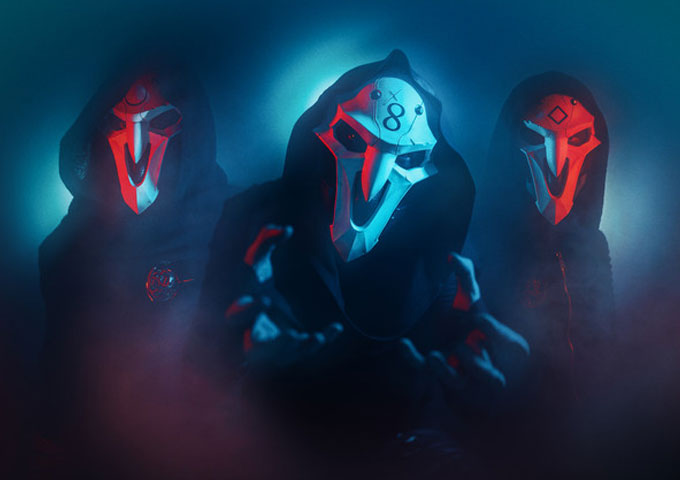
Formed in 2018 during what the band calls its first era, Nothing But Real emerged from Tom’s imagination and a science-fiction universe developed around the SAKAR story. Between 2019 and 2024, the project released two singles, two albums, and several remixes, with its artistic direction evolving through successive experiences. In 2025, the band entered a new phase with a new producer, director, and lead singer, reworking its musical identity and expanding its scenography. Greater emphasis on the musicians’ interpretation of fictional characters known as The Sentinels helped launch the ambitious “Lost in the World Rebirth” project. This combination of performance, storytelling, and visual imagination provides an important context for understanding the dramatic world of “Creatures,” released on September 18, 2026.
The song opens with a deceptively simple, nursery-rhyme-like vocal motif, establishing an almost hypnotic atmosphere before introducing images of a cracking mirror and blood in the light and darkness. The contrast is immediately unsettling. Something familiar and seemingly innocent sits beside an image of violence, suggesting that the disturbance is not arriving from an entirely foreign source but emerging from within a recognizable sense of self.
The mirror is the song’s most revealing symbol. Traditionally associated with self-knowledge and recognition, it becomes an unstable surface through which identity begins to disintegrate. Its cracks suggest that the narrator’s existing understanding of themselves can no longer hold together, while the blood gives this psychological fracture a more visceral dimension. References to both light and night further complicate the imagery, resisting a simple division between virtue and evil. Darkness is not confined to the shadows, just as illumination does not guarantee innocence.
The first verse develops this crisis through a narrator whose reflection is fading and whose identity seems obscured by a mask. The accompanying stage imagery suggests someone performing a role or trapped in a version of themselves that no longer feels authentic. Competing inner voices demand healing and fighting, placing the narrator between restoration and resistance. Neither impulse offers an easy resolution. The conflict becomes more pointed when the narrator recognizes the beast and the human being as two aspects of the same identity.
That admission gives “Creatures” its central psychological tension. Rather than presenting monstrosity as something belonging exclusively to an enemy, the song locates it inside the individual. The beast might represent aggression, resentment, fear, or impulses that social conventions encourage people to conceal. Yet the human figure retains the capacity for tenderness and self-awareness. The unsettling possibility is that neither side can be entirely separated from the other.
The recurring contrast between the beast outside and the gentle heart within makes this contradiction especially poignant. An intimidating exterior does not necessarily reveal a cruel interior, but carrying hidden darkness can still become oppressive. The narrator describes feeling distressed by the shadows they keep, suggesting that concealment has developed into a burden of its own. Even kindness seems threatened by these buried impulses, as though compassion must contend with something the narrator cannot fully control.
The lyrics leave the precise nature of this struggle unresolved. The narrator might be confronting destructive behavior, wrestling with shame, or experiencing the broader fear of discovering an unfamiliar self beneath a carefully maintained appearance. That ambiguity gives the song room to resonate beyond its fictional setting. Its monster imagery becomes a metaphor for the gap between outward presentation and inward reality, capturing the discomfort of recognizing qualities in oneself that are difficult to accept.
The second verse expands this private crisis into a collective reckoning. The approaching sundown suggests a moment when familiar certainties begin to fade, while references to ghosts and concealed truths imply that unresolved experiences cannot remain buried indefinitely. These ghosts need not be supernatural presences. They might represent past decisions, guilt, old wounds, or memories that continue to shape behavior long after someone believes they have moved on.
By addressing everyone rather than remaining within an entirely personal narrative, the song suggests that self-confrontation is universal. The truth beneath one’s appearance may be uncomfortable, but avoidance offers no permanent escape. The urgency of the lyrics lends the conflict the scale of an approaching catastrophe, even as its emotional substance remains recognizably human.
The chorus complicates the prospect of freedom. The narrator describes falling into a shape while reaching for escape, suggesting entrapment within an imposed identity, a destructive pattern, or a self-image that has become impossible to sustain. The declaration that the dream is over carries the sting of disillusionment. An illusion has collapsed, but its disappearance does not automatically deliver liberation. The narrator must now confront whatever reality lies beneath it.
When the fractured-mirror imagery returns, the sense of psychological entrapment intensifies. The repeated declaration of taking a shot introduces a more confrontational energy, suggesting an attempt to seize control or act decisively after prolonged hesitation. Its precise meaning remains open, but the repetition creates a sense of mounting determination. The return to the chorus leaves the central struggle unresolved, preserving the tension between the desire to break free and the difficulty of escaping an identity shaped by one’s own shadows.
These lyrical ideas align closely with Nothing But Real’s broader artistic philosophy. The band’s fusion of progressive rock, metal, pop, electronic music, and orchestral influences offers a framework for exploring emotional contradictions through cinematic atmosphere and dramatic scale. Its interest in epic and horrific moods complements lyrics concerned with fractured identities, concealed truths, and the emergence of an inner beast. Fictional storytelling becomes a means of examining recognizable human behavior rather than an escape from it.
Ultimately, “Creatures” finds its defining tension in the distance between who people believe themselves to be and what they fear they might discover beneath the surface. Its fractured mirror offers no stable reflection, and its beast cannot simply be dismissed as someone else’s problem. Nothing But Real turns that uncomfortable recognition into a compelling premise for cinematic hybrid rock, inviting listeners to confront the parts of themselves they would rather leave unseen.
OFFICIAL LINKS: YOUTUBE – SPOTIFY – INSTAGRAM – APPLE MUSIC – FACEBOOK


