
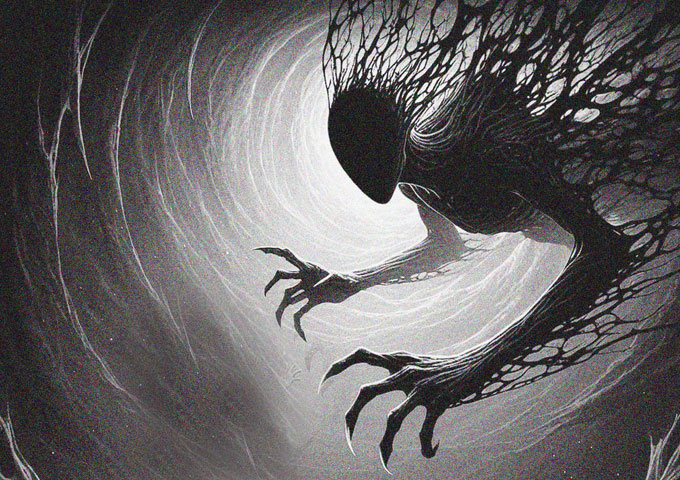
Brad Bass Confronts the Weight of a Broken Throne on “Goodbye”
A slow-burning farewell wrapped in overdriven guitars and grunge-soaked grit Where cinematic rock meets sludge metal in a portrait of quiet reckoning “Goodbye” marks the moment an artist stops asking permission to leave
Some songs whisper their sorrow. Brad Bass lets his roar, then lets it simmer down into something far more unsettling than volume alone could ever achieve. With his single, “Goodbye,” released on May 31, the prolific multi-genre artist and published science fiction and fantasy author (known for novels like Magic World and Crashed) trades some of his usual experimental sprawl for a track that hits with immediate, visceral clarity. It is not a departure from his avant-garde instincts so much as a distillation of them, proof that Bass can channel his restless creativity into a shape built for wider ears without ever softening the emotional blade at its center.
“Goodbye” unfolds as a slow-motion reckoning, the kind of song that feels less like it was written and more like it was excavated. From its opening moments, the track establishes a narrator perched somewhere above the world he is describing, observing his own life with the detached bewilderment of someone finally seeing clearly for the first time. There is a throne in this story, though it is no seat of power. It reads instead as a symbol of isolation, a vantage point that offers perspective without offering comfort. Brad Bass uses this image to frame a character caught between confusion and clarity, someone who has spent enough time looking outward that he has lost track of what he actually wants. That uncertainty, laid bare in the song’s early lines, is what makes the track feel so human rather than merely dramatic. Before any resolution arrives, Bass makes sure the listener understands the fear and disorientation that precede it.
What elevates “Goodbye” beyond a simple breakup narrative is the way betrayal seeps into the lyrics without ever tipping into melodrama for its own sake. The narrator names his hurt plainly, admitting to feeling lost and wounded, but he does not linger there. Instead, the song pivots toward resolve. This is where the track’s real power lives, in the transition from paralysis to action. The repeated insistence on standing tall, on changing everything, on finally speaking the truth, functions almost like a mantra, a self-administered push toward courage. Brad Bass structures these declarations with a rhythmic insistence that mirrors the drumbeat itself, each phrase landing like a step forward rather than a cry backward. It is less an explosion of anger than a hard-won decision, the kind that arrives only after exhaustion has burned away every easier option.
The instrumentation mirrors this emotional arc with remarkable discipline. The overdriven guitar riffs carry the weight of grunge and sludge without ever descending into chaos, instead maintaining a measured, almost funereal pace that allows tension to accumulate rather than detonate. The slapping drumbeat, deliberate and unhurried, acts as a heartbeat beneath the track, grounding the melodrama in something physical and steady. This restraint is crucial. A lesser arrangement might have rushed toward catharsis, but Brad Bass understands that the song’s power comes from delay, from making the listener sit inside the narrator’s hesitation before granting release. The cinematic quality of the production, all shadow and slow-building weight, gives the song a sense of scale that feels earned rather than manufactured.
Vocally, Brad Bass delivers a performance that walks the line between vulnerability and command. His dynamic, expressive tone does the heavy lifting of translating internal conflict into something audible, shifting from weary resignation to defiant clarity as the song progresses. There is real theatricality here, but it never feels performative in a hollow sense. Instead, it feels like the natural register of someone finally allowing themselves to be fully seen, flaws, fear, and all. That melodramatic edge, far from undercutting the song’s sincerity, is precisely what makes it so effective. Grief and anger rarely announce themselves quietly, and Brad Bass understands that letting the vocal swell into something larger than life is often the most honest way to represent an experience that feels larger than life to the person living it.
As the song moves toward its close, the narrator turns away entirely, choosing silence and departure over further explanation. There is something quietly devastating about this refusal to keep pleading a case that has already been lost. Brad Bass suggests, without ever stating it outright, that the person being left behind will eventually have to reckon with the consequences of their own actions, the seeds of sadness they themselves planted. It is a farewell delivered not with cruelty but with finality, the kind that only comes once someone has truly exhausted every other option.
“Goodbye” succeeds because it never mistakes intensity for depth. Every riff, every drum hit, every vocal swell serves the story Brad Bass is telling, one of a man reclaiming his own narrative after too long spent absorbing someone else’s damage. It is a single that rewards patience, unfolding its meaning gradually rather than front-loading its impact, and it stands as a compelling entry point into Bass’ broader catalog for listeners who crave music with genuine emotional architecture. For an artist who has spent his career pushing against convention, “Goodbye” proves that accessibility and depth are not mutually exclusive. Sometimes the most radical thing an artist can do is simply tell the truth, loudly, slowly, and without apology.
If you want to delve deeper into his music, you can explore more of his tracks through the More Brad Bass YouTube Playlist or his SoundCloud Page where he posts audio files of his work. Check out his books @ https://scimitaredge.com/BradBass