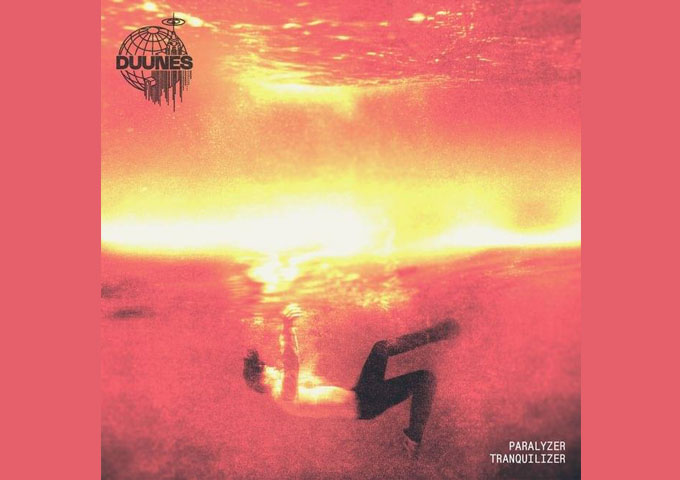
DUUNES Ventures Into the Neurological Wilderness with Explosive New Single “Paralyzer Tranquilizer”
In the unforgiving concrete jungle of New York City, where dreams collide with reality at breakneck speed, Harrison Cohen has forged something extraordinary under the moniker DUUNES. His latest offering, “Paralyzer Tranquilizer,” emerges as a sonic testament to the modern struggle between mental chaos and the desperate search for clarity—a raw, unflinching exploration of what it means to be trapped inside your own mind.
“Paralyzer Tranquilizer” isn’t merely a song; it’s a neurological blueprint, mapping the treacherous terrain of migraine-induced disorientation with surgical precision. Cohen‘s decision to channel his debilitating migraine episodes into art reveals an artist unafraid to mine his deepest vulnerabilities for creative gold. The track, co-written and produced by Cass Dillon (whose credits include Grey Daze, Morgan Saint, and Goo Goo Dolls) and mastered by Dave Cooley (the sonic architect behind Spoon, M83, and Madvillain), represents a marriage of raw emotional honesty and professional sonic craftsmanship.
The production itself mirrors the migraine experience—rumbling basslines that feel like pressure building behind the temples, driving guitar riffs that cut through the fog like shards of light, and Cohen‘s soaring vocals that oscillate between desperation and determination. The instrumentation doesn’t just accompany the lyrics; it becomes the physical manifestation of neurological distress.
The genius of “Paralyzer Tranquilizer” lies in its ability to transform medical terminology into emotional metaphor. Cohen‘s reference to “triptans”—a class of migraine medications—alongside imagery of “bowling a strike here with my head” creates a visceral understanding of pain that transcends mere description. The song’s central metaphor positions the migraine as both paralyzer and tranquilizer, a cruel double-edged sword that simultaneously immobilizes and numbs.
The opening verses establish a foundation of inadequacy and confusion, with Cohen articulating the feeling of being “tripped up” and caught in “constant flux.” The migraine becomes a lens through which all of life’s uncertainties are magnified, creating a feedback loop of physical pain and emotional turbulence. His admission of being “drugged” by his own neurological condition speaks to the involuntary altered states that chronic pain sufferers know all too well.
Perhaps most striking is Cohen‘s exploration of isolation within the lyrics. The “waiting room that never ends” serves as a powerful metaphor for the liminal space between wellness and illness, where time stretches and contracts according to the rhythm of pain. The image of being “comatosed on Mars” while “hyperspacing through the stars” captures the dissociative quality of severe migraines—present in body but mentally light-years away from normal human experience.
The song’s emotional core revolves around the paradoxical relationship between darkness and illumination. Cohen finds “clarity here in the dark,” suggesting that sometimes our deepest insights emerge from our darkest moments. This isn’t romantic suffering; it’s the hard-won wisdom that comes from surviving your own mind’s rebellion against you.
The recurring phrase “violence of the night” positions nighttime not as peaceful respite but as a battlefield where internal wars are fought. The fear of disappearing “without a shot inside the light” speaks to the terror of being consumed by pain before having the chance to make one’s mark on the world. This existential dread elevates the song beyond personal confession into universal territory—who among us hasn’t feared being forgotten?
The bridge’s imagery of “matters of the heart” being missed while “busy comatosed on Mars” reveals the collateral damage of chronic conditions. Relationships suffer, opportunities pass by, and life happens in the periphery while the sufferer remains trapped in their own neurological prison. The “cell” referenced in the chorus becomes both literal—the confines of a darkened room during a migraine—and metaphorical—the mental prison of chronic pain.
“Paralyzer Tranquilizer” represents a sophisticated evolution in DUUNES‘ sonic identity. Where previous releases demonstrated Cohen‘s ability to craft infectious hooks and explosive choruses, this track showcases his capacity for emotional depth and lyrical complexity. The influence of The Killers, Young the Giant, and Kings of Leon remains evident in the track’s anthemic qualities, but Cohen has developed a distinctive voice that speaks to a generation caught between ambition and anxiety.
The production choices reflect this maturity. Rather than relying solely on volume and energy, Dillon and Cohen have crafted a sonic landscape that breathes with the lyrics. The strategic use of space—those moments where the music pulls back to let Cohen‘s vocals carry the emotional weight—demonstrates a confidence in the material that allows vulnerability to coexist with power.
Cohen‘s rise under the DUUNES banner reads like a modern success story, but one grounded in authentic struggle and genuine artistic vision. The viral success of his “Ain’t No Rest for the Wicked” cover (accumulating over 25 million views across platforms) could have been a moment to cash in on fleeting internet fame. Instead, Cohen used that platform to build something more substantial.
The progression from viral covers to sold-out shows at venues like The Bowery Ballroom, opening slots for Joe P at WFUV’s Racket NYC showcase, and the inclusion of “Delusional” on Spotify’s Best of Fresh Finds Rock 2024 reveals an artist who understands the difference between momentary attention and lasting impact. With over 100,000 monthly listeners on Spotify and radio spins on NYC’s WFUV, DUUNES has transcended the typical trajectory of internet viral artists.
What makes “Paralyzer Tranquilizer” particularly compelling is its function as both personal catharsis and public service. By transforming his migraine experience into accessible art, Cohen has created a bridge between the isolating experience of chronic pain and the shared human experience of struggle. The song doesn’t offer false hope or easy answers; instead, it provides the more valuable gift of recognition and understanding.
The track’s exploration of mental health through the lens of physical ailment arrives at a cultural moment when such conversations are increasingly necessary. Cohen‘s willingness to be vulnerable about his neurological struggles contributes to a broader destigmatization of chronic conditions and mental health challenges.
With new music scheduled for monthly releases throughout 2025 and touring plans spanning the East Coast, Midwest, and Pacific Coast, DUUNES is positioning itself for sustained growth rather than flash-in-the-pan success. “Paralyzer Tranquilizer” serves as both a culmination of Cohen‘s artistic development to date and a preview of the emotional depths he’s willing to explore.
The song’s success will likely be measured not just in streaming numbers or radio play, but in its ability to connect with listeners who recognize their own struggles in Cohen‘s unflinching honesty. In an era of manufactured authenticity, DUUNES offers something increasingly rare: genuine artistic expression born from genuine human experience.
“Paralyzer Tranquilizer” stands as a testament to the transformative power of art—the ability to take our most private pains and, through creative alchemy, transform them into shared understanding. In the hands of Harrison Cohen, a migraine becomes a metaphor, a medical condition becomes a musical revelation, and personal struggle becomes universal truth.