
Kappiya’s “The Hell I Designed” Is a War-Torn Reckoning of Devastating Power
There is a particular kind of artist who cannot create without cost, whose music arrives not from inspiration but from excavation, dug out of the harder, darker places that most people spend their lives trying to forget. Kappiya is precisely that kind of artist, and “The Hell I Designed” is precisely that kind of song.
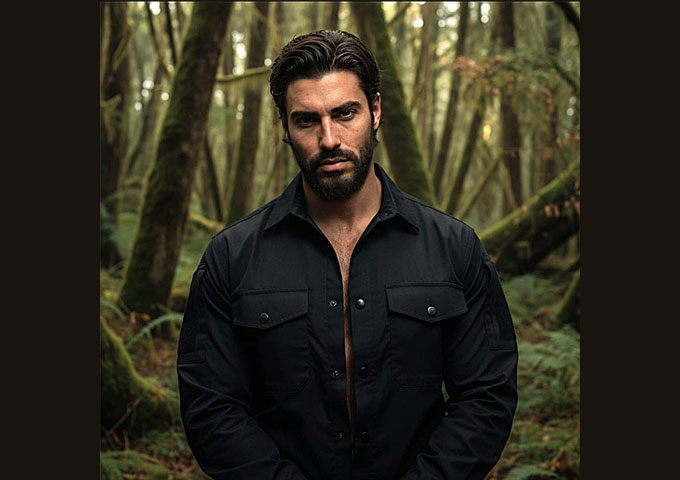
Born from the mist-cloaked solitude of Virginia’s Shenandoah Valley, Kappiya is a former military man who carried the weight of the frontlines back into civilian life and, rather than burying it, detonated it across a body of music that refuses to be ignored. He has built an off-grid existence that mirrors his artistic philosophy entirely. No social media presence, no algorithmic maneuvering, no carefully curated digital persona. To find Kappiya, you have to go where he actually lives, and that place is the music itself.
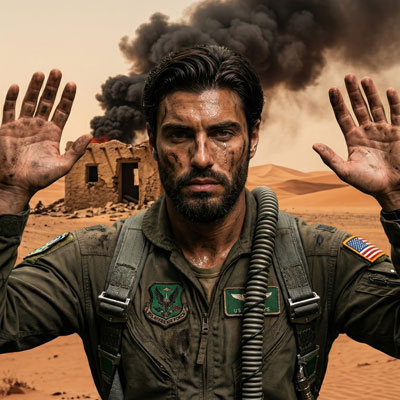
“The Hell I Designed” opens with an image of devastating precision: silver wings burning, falling from the sky, a pilot watching smoke trails with terrified eyes. Within the first few lines, the narrative framework is already established with brutal clarity. This is not a song about the abstract horror of war, it is a confession from inside it, delivered by a man who operated the machinery of destruction and is now standing in its wreckage. The imagery of silk in the dirt and boots in the sand draws an immediate, visceral contrast between the clinical remoteness of modern warfare and the shattered, intimate reality it leaves behind on the ground.
What makes the songwriting so penetrating is the way Kappiya navigates the psychological architecture of guilt. The chorus does not arrive as catharsis so much as confrontation: the admission that he brought the thunder but fears the rain is one of the most quietly devastating lines in recent rock memory. The uniform worn while hiding the stain speaks to the impossible dissonance of institutional duty colliding with personal moral collapse. Following orders, walking the line, and yet the blood remains entirely his. The chorus does not excuse, it does not deflect. It owns.
The second verse deepens the nightmare. Shadows climbing canyon walls, ghosts in echoing calls, a broken child’s toy buried beneath rubble, the Iranian night closing in with no rescue and no redemption on offer. The line about being already locked in his own iron bars while others hunt the devil is a masterclass in self-aware condemnation. The external threat becomes secondary to the internal prison, which is of course the truest form of psychological torment any soldier can carry home.
Then comes the bridge, and it is where “The Hell I Designed” ascends from powerful to genuinely profound. A flashlight, rifles rising, surrender, and then an old man stepping through the crowd with a cup of water extended to a trembling hand. The enemy offers mercy. The mercy, Kappiya sings, is heavier than lead, and he wishes to God they had shot him instead. It is one of the most emotionally sophisticated moments in contemporary rock songwriting, because it understands that survival without absolution is its own form of annihilation. The grace of the enemy becomes the final, unbearable accusation. The closing lines strip everything back to its rawest essence: captured by grace, locked in shame. They gave water. He gave flame. The hell was always his own design.
Musically, the track is a towering achievement. Resonating guitars carry the structural weight with authority, while the drums provide a pulse that feels less like rhythm and more like a heartbeat under duress. The sweeping cinematic orchestral elements arrive at precisely the right moments, amplifying the emotional drama without ever smothering the raw core of the performance. This is not embellishment for its own sake; every flourish earns its place.
The vocal performance demands particular attention. Kappiya‘s lead vocals move fluidly and fearlessly between registers and emotional registers, singing with control, then shouting with urgency, screaming with anguish, wailing with grief, and grumbling with the low rumble of a man carrying something very heavy for a very long time. The fact that every mode of expression lands with equal conviction is a testament to both the technical ability and the genuine emotional truth powering the delivery. Nothing here sounds performed. It sounds lived.
The architecture of the track itself is built with considerable craft. The verses function as a slow, deliberate tightening of tension, each image adding another layer of pressure, another weight to the accumulating burden. When the chorus finally breaks, it does not resolve the tension so much as tear it open, which is why repeated listens feel just as urgent as the first. Kappiya understands the essential grammar of rock music: build, release, devastate.
Across his multi-genre catalog, Kappiya has demonstrated a consistently strong and uncompromising artistic identity. But “The Hell I Designed” represents something grander in scale and more dominant in presence, a full command of the rock and alternative rock space that announces an artist operating at the very peak of his creative powers.
This is music made by someone who has genuinely been somewhere most people never go, and who has found the only honest way to process it. You won’t find Kappiya on your timeline. But if you press play, he will find you.
OFFICIAL LINKS: SPOTIFY – APPLE MUSIC




Emotional lyrics and perfect timing given what is happening in the region!
A well written song that presents a true reflection of the internal conflict many of us veterans face after coming back from combat zone.