Healing in Real Time. How Feelshift Turns Pain Into Power on “Now I See (Unplugged Version)”
There are artists who polish their wounds into something tidy and distant, and then there is Feelshift. This project lives at the fault line where trauma, truth, and creation collide. It is not a brand. It is not a persona. It is a lived experience unfolding in real time, a documentation of what happens to a human being when betrayal shatters their world and they choose to transmute the wreckage instead of bury it.
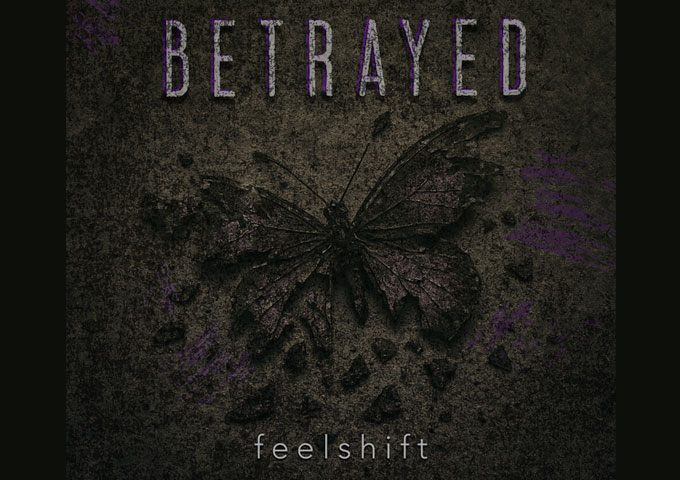
With the release of “Now I See (Unplugged Version)”, Feelshift opens a door into the most intimate chamber of this ongoing journey. The track is taken from the debut album BETRAYED, a body of work that traces a psychological timeline many survivors know but rarely articulate. Intoxication. Rupture. Loops. Awakening. The first unsteady steps back toward oneself. Across the album, genres shift like the nervous system of someone in crisis. One moment you’re in industrial grit, the next you’re suspended in 1920s jazz or sitting inside a confessional unplugged performance. Healing doesn’t follow a formula, and neither does Feelshift.
The unplugged version of “Now I See” is the project at its most bare. No production armor. No metaphorical escape routes. What remains is a single voice, trembling yet resolute, and a guitar line steady enough to carry an emotional truth that most people never dare to say aloud.
Feelshift didn’t write this track from a distant vantage point. “Now I See (Unplugged Version)” came from one night, two weeks before the album’s release, when the realization landed that surviving devastation is not the end but the beginning. The artist had been sifting through hundreds of journal pages, thousands of texts, and several unsent goodbye letters, searching for the exact words buried beneath layers of grief and shock.
Out of that excavation came a revelation: I am being rebuilt from the ruins of me. It’s the kind of insight that doesn’t feel triumphant. It feels like standing in the middle of the emotional debris, recognising that the collapse has already happened. What’s left now is possibility. That moment is what the song captures. Not empowerment as an aesthetic. Empowerment as a fragile, flickering truth.
Betrayal trauma is disorienting. It scrambles memory and speech. It interrupts the ability to trust anything, including your own perception of reality. Feelshift writes from inside that state, not after it. That’s what gives the lyrics their unusual sharpness. There is no abstraction, no poetic veil to soften the blow. The song unfolds like a diary being read as it’s written.
When Feelshift sings about seeing clearly for the first time, it isn’t an epiphany crafted for dramatic effect. It’s the slow emergence of a self that had been swallowed by grief. The lyrics trace the moment when awareness breaks through the fog, when you recognize you are still standing in the ruins but no longer defined by them.
There are lines that speak to exhaustion, shaking, the sheer physicality of emotional pain. But threaded through that heaviness is a profound shift. A reorientation toward future instead of aftermath. The song acknowledges the darkness while refusing to stay loyal to it.
Musically, the unplugged arrangement gives the track an almost sacred stillness. The guitar doesn’t overwhelm but instead becomes a pulse, a heartbeat under steadying pressure. The vocal performance carries a rawness that feels less performed and more lived. You can hear the weight of the night that inspired it. You can hear the relief of the realization. You can hear a person fighting to stay alive emotionally, one breath at a time.
There is nothing ornate about this version. That simplicity is the point. It forces the listener into the same state of presence the artist was in when the words arrived. The effect is intimate and grounding, as if the song isn’t being played to you but offered to you.
One of the most striking qualities of “Now I See (Unplugged Version)” is its refusal to hand out easy answers. The song never claims that healing is quick or linear or guaranteed. Instead, it provides a space where listeners who feel isolated by their own pain can finally exhale. Feelshift’s honesty becomes a bridge.
The track tells anyone carrying betrayal trauma, childhood wounds, or life-stopping grief that they are not broken and they are not alone. It does not offer a shortcut. It offers companionship. The reminder that even if healing takes years, it remains possible.
The emotional impact comes not from grand declarations but from quiet truths spoken plainly. The song acknowledges what most people hide. It validates what most people doubt. And in doing so, it becomes a lifeline.
Within the broader narrative of BETRAYED, “Now I See (Unplugged Version)” marks a pivot. It is the moment when despair loosens its grip just enough for the first glimmer of clarity to shine through. The shift from collapse to reconstruction. The recognition that the self is not gone, only buried.
This is healing captured mid-process, not in hindsight. That’s what makes Feelshift’s work so rare. It documents transformation as it happens, not after it’s been curated into something more digestible. The result is a kind of emotional realism that hits with extraordinary force.
At its core, “Now I See (Unplugged Version)” is a confession, a release, and a reawakening. It is the sound of someone piecing themselves back together, note by note. The song doesn’t reach for perfection. It reaches for truth. And in doing so, it becomes something profoundly human.
Feelshift’s mission is to heal out loud, offering sound and language to people who feel like their pain is unspeakable. This track does exactly that. It is quiet, honest, and life-changing in its simplicity. It reminds us that even in the darkest moments, there is a path back to ourselves. And if you are in your own darkness, Feelshift’s message is clear. Keep going.
OFFICIAL LINKS: Facebook – Instagram – TikTok – YouTube – Spotify